
Radon-Induced Lung Cancer: The Warning Signs, the Stages, and the Risk Hiding in Your Home
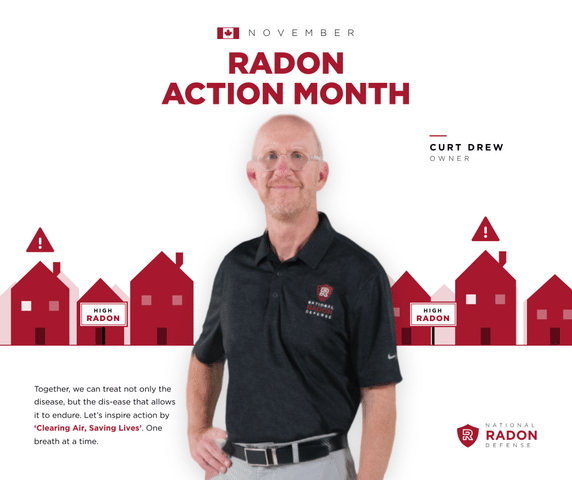
November is Lung Cancer Awareness Month and Radon Action Month in Canada. It is a time to talk about a disease that changes lives, turns ordinary days into hospital visits, and leaves families facing questions they never expected to ask.
We talk about lung cancer being associated with smoking, but that is not the whole story. People who have never smoked can develop it, too. One major risk factor is radon, an invisible radioactive gas that can build up inside homes and other buildings without anyone knowing.
The difficult truth? By the time symptoms appear, the disease may already be advanced. Have you ever asked yourself what’s the first sign to prevent this from happening? That is why understanding radon and testing your home matters.
What Is Radon-Induced Lung Cancer?
Radon is a naturally occurring radioactive gas released as uranium in soil and rock breaks down. It can enter buildings through foundation cracks, floor drains, gaps around pipes, and other openings. Because it has no color, smell, or taste, you cannot identify elevated levels by looking around your home.
When people breathe in radon decay products, radioactive particles can damage lung tissue. Note that this isn’t instant. Over time, repeated exposure can increase the risk of lung cancer.
The risk depends on factors such as radon concentration, duration of exposure, and smoking history. Smoking and radon exposure together increase the risk even further.
According to Health Canada, radon is the leading cause of lung cancer among nonsmokers in Canada and contributes to more than 3,000 lung cancer deaths annually. Health Canada’s radon guidance explains why this risk deserves attention.
Not everyone exposed to radon will automatically develop cancer – studies are now discovering that radon exposure effects can go beyond the lungs. But the risk is real, and the gas provides no warning that it is present.
Early Signs or Symptoms of Lung Cancer You Should Never Ignore
One of the hardest parts of lung cancer is that it may cause no noticeable symptoms in its early stages. When symptoms do develop, they can resemble common respiratory illnesses, which makes it easy to dismiss them.
Potential warning signs include:
• A persistent cough or a cough that keeps getting worse
• Coughing up blood, even in small amounts
• Chest pain, particularly when coughing or taking a deep breath
• Shortness of breath or wheezing
• Repeated respiratory infections, such as bronchitis or pneumonia
• Unexplained weight loss or loss of appetite
• Persistent fatigue or weakness
• Hoarseness that does not improve
These symptoms do not automatically mean someone has lung cancer. However, persistent or worsening symptoms deserve medical attention. Coughing up blood or experiencing severe breathing difficulty requires prompt medical assessment.
And here is an important distinction: radon exposure itself does not cause immediate warning symptoms. You cannot tell whether your home has elevated radon by how you feel. Testing is the only way to find out.
How Lung Cancer Progresses from Stage 1 to Stage 4
Lung cancer is commonly described in four stages. The stage helps doctors understand how far the cancer has spread and determine appropriate treatment. The exact progression varies by cancer type, and not every person experiences the same symptoms or timeline.
Stage 1: Cancer Is Still Localized
At Stage 1, cancer is limited to the lungs and has not spread to nearby lymph nodes. Many people have no obvious symptoms at this point. When detected early, lung cancer may be treatable with surgery or other therapies, depending on the individual case.
Stage 2: Cancer Has Grown or Spread Nearby
At Stage 2, the tumor may be larger or may have spread to nearby lymph nodes or structures, depending on the specific cancer. Some people begin experiencing a persistent cough, chest discomfort, or breathing changes. Treatment may involve surgery, chemotherapy, radiation, immunotherapy, or a combination.
Stage 3: Cancer Has Spread Further Within the Chest
Stage 3 lung cancer may involve lymph nodes or structures farther from the original tumor within the chest. Treatment becomes more complex and often involves a combination of therapies. Symptoms can include worsening cough, chest pain, shortness of breath, and fatigue.
Stage 4: Cancer Has Spread to Distant Parts of the Body
At Stage 4, the cancer has spread beyond the original lung to distant areas, which may include the brain, bones, liver, or adrenal glands. Symptoms depend on where it has spread and may include significant fatigue, weight loss, pain, headaches, or neurological changes. Stage 4 is serious, but treatment can still help control the disease, relieve symptoms, and, in some cases, extend life. Every person's situation is different.
These stages are not a prediction of what will happen to anyone. They show why early detection and appropriate medical care matter.
Can Radon-Induced Lung Cancer Be Prevented?
Not every case of lung cancer can be prevented. But reducing exposure to known risk factors is an important step.
Radon is one risk homeowners can take action against. You do not need to wait for a warning sign, a family diagnosis, or a neighbor's test results.
Start with these steps:
1. Test your home for radon. Radon levels can vary dramatically from one home to another, even on the same street.
2. Follow testing instructions. Use a suitable long-term test or consult a qualified radon measurement professional.
3. Take action if levels are elevated. A qualified radon mitigation professional can recommend and install a radon mitigation system to reduce radon levels.
4. Retest as recommended. Confirm that the system is working and continue monitoring according to professional guidance.
In Canada, Health Canada's guideline recommends taking corrective action when the average annual radon concentration exceeds 200 Bq/m³ (5.4pCi/L). In the United States, the EPA recommends mitigation at 4.0 pCi/L or higher. Follow the guidance that applies where you live.
This November, Make the Invisible Risk Part of the Conversation
Lung cancer affects a person’s health more than. It affects partners, children, parents, friends, finances, and the future a family thought it had planned. That is what makes radon awareness so important. A home can look perfectly safe while containing elevated radon levels. And waiting for symptoms is not a prevention strategy.
At National Radon Defense, our mission is to help more people understand radon, test their homes, and find solutions when elevated levels are discovered.
You cannot see radon. You cannot smell it. But you can test it, and you can take action.
This November, start the conversation with your family. Test your home. If results are elevated, contact a qualified radon professional.
Because protecting a home means more than protecting the building. It means taking steps to protect the people living inside it.
Learn more about radon testing and radon mitigation with National Radon Defense by getting a free estimate here.


