
Before & After Photos
Click on a photo to enlarge.
Crawl Space Sealing in Beaver Dam, KY
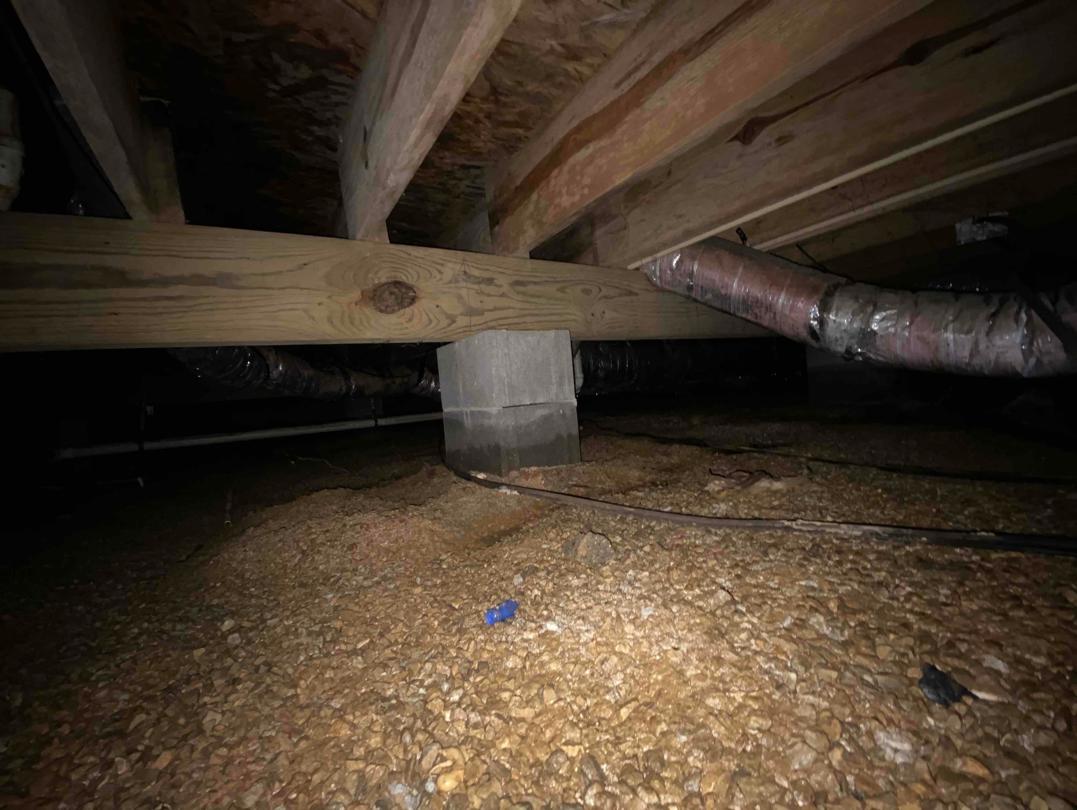

Homeowner in Beaver Dam, KY, was interested in getting an estimate for a new vapor barrier. Having heard from friends and family in Beaver Dam who had work done from us, they decided to give Healthy Spaces a call.
We installed CleanSpace vapor barrier, which is a durable, bright white crawl space liner that installs on the walls and floors, preventing water vapor and humidity from passing by. By keeping their crawl space dry, they're protecting their structure from mold and rot.
Beaver Dam, KY Crawlspace Vapor Barrier Installation


Here, you can really see the difference that CleanSpace makes! The initial crawlspace was lumpy dirt floor, covered in a clear plastic sheet. When the sheet was pulled back, it was amazing to see how moldy and gross that plastic had become and how tattered and shredded it was. Underneath the plastic, there was a failed trench system for drainage. Instead of helping control the influx of water, it trapped over 4" of standing water in the crawlspace, which lead to mold and fungus growth among other problems.
Damon Cheatham with Healthy Spaces came out and inspected the crawlspace. He designed a comprehensive water removal system to keep the crawlspace dry all the time! The installation team started by remediating the mold, removing the debris, and leveling the floor of the crawlspace. Next, they re-dug the trench system to fit an EZFlow drainage system, which connects to a SuperSump sump pump system to remove the water. The entire crawlspace needed to be more energy efficient as well, so SilverGlo insulation was installed along the walls and in the spaces between the subfloor joists. The crew installed 1,134 sq feet of Cleanspace, two vent covers, and an EverLast Crawlspace well and door for entry. Finally, a Sani-dry dehumidifier was installed in the crawlspace to keep the space conditioned and the relative humidity low so mold won't grow in there again.
Tell City, IN Crawlspace Vapor Barrier


As you can see in these pictures, there's a huge difference between a crawlspace with an old black plastic vapor barrier and a CleanSpace installation! One of the benefits of a CleanSpace system is that it is guarnteed against rips, tears, or water on top of the liner for 25 years. The white surface of the Cleanspace reflects light instead of absorbing it (like that old black plastic), making a brighter crawlspace experience!
Crawl Space Issues in Cannelton, IN


Karleen H. from Cannelton, IN had recently bought a new home. The Inspector didn't find any mold, but after moving in, the crawl space smelled very musty. They hadn't been down there since they moved in but knew that they needed to turn this job over to the professionals. They gave Healthy Spaces a call and we went out to do a free no-obligation inspection.
System Design Specialist, Damon Cheatham, inspected the home and proposed a solution. First, the mold filled vapor barrier was pulled up by our install crew. Not only that, but the barrier itself has pulled away from the walls and wrinkled up to the point that it is not functional. From there, we installed CleanSpace. Our CleanSpace encapsulation system is lined in crawl spaces to permanently separate your home from the ground. This is part of a healthy crawl space and a healthy home. The new SmartSump sump pump is used for your crawl space drainage system. It is designed just for crawl spaces because the liner and lid form a tight seal around the CleanSpace liner.
Karleen is happy with her transformed crawl space and is even happier that the mold smell is gone.
New Vapor Barrier in Branchville, IN

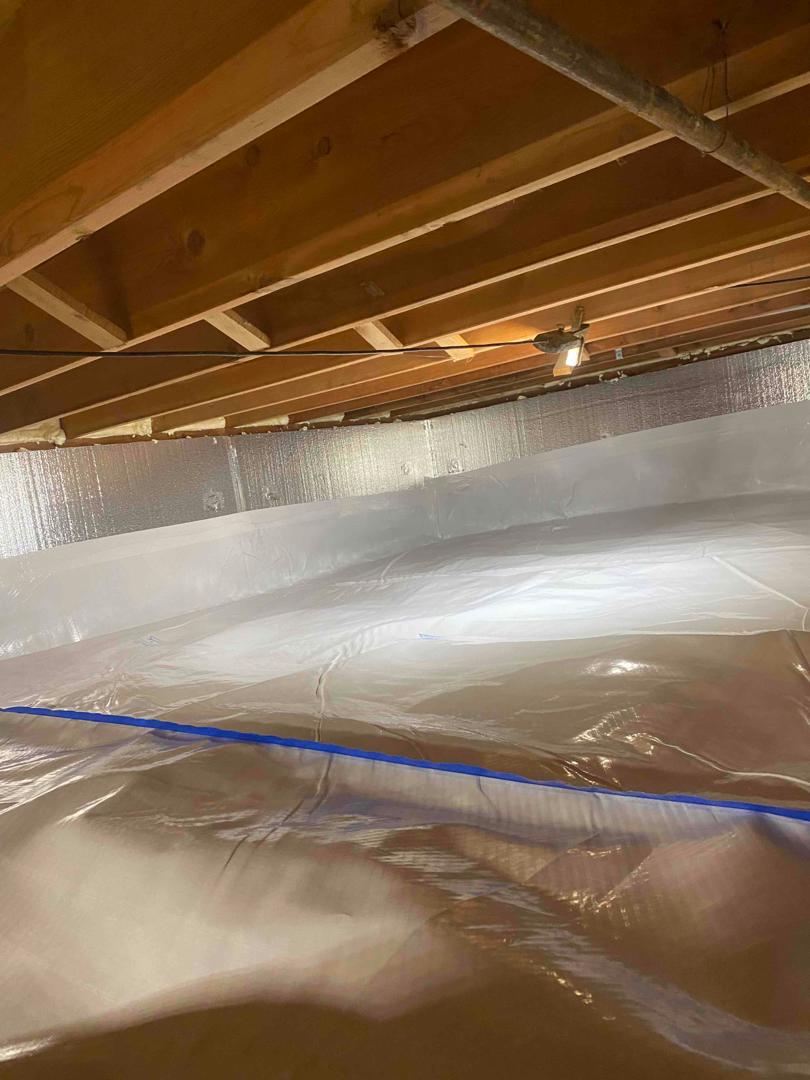
Homeowner in Branchville, IN had a damp environment in his crawl space underneath his home. Any moisture is bad in a crawl space because not only do insects and critters of all kinds love this type of environment and wet materials, but mold also thrives in it as well. Our client had previously used Healthy Spaces before at a different home so he knew he wanted to give us a call to help him with his unhealthy space.
Our System Design Specialist worked with him to create a plan that he felt comfortable with and would give him peace of mind. Our team installed a complete encapsulation system, along with drainage matting, and crawl space wall insulation.
Because he had a concrete floor with rocks over the top, we installed our CleanSpace drainage matting. This is used when it's difficult to install a drainage system. Installed under our CleanSpace vapor barrier, the matting creates a drainage space and thermal break between CleanSpace and the ground. Next, we installed our SilverGlo Wall Insulation. SilverGlo is infused with graphite, which reflects heat and lower's the material's conductivity. This makes your crawl space and floors above them warmer in the winter and lowers your cost of heating bills. Lastly, our team installed over the top of the drainage matting and SilverGlo our CleanSpace Vapor Barrier. Our CleanSpace Encapsulation System completely isolates your home from the earth by sealing it over the floor and walls.
Looking to have a vapor barrier installed in your crawl space? Give Healthy Spaces a call today for a free, no-obligation assessment!


