
Before & After Photos
Click on a photo to enlarge.
Before & After - Radon Mitigation Installation | Gray, Maine
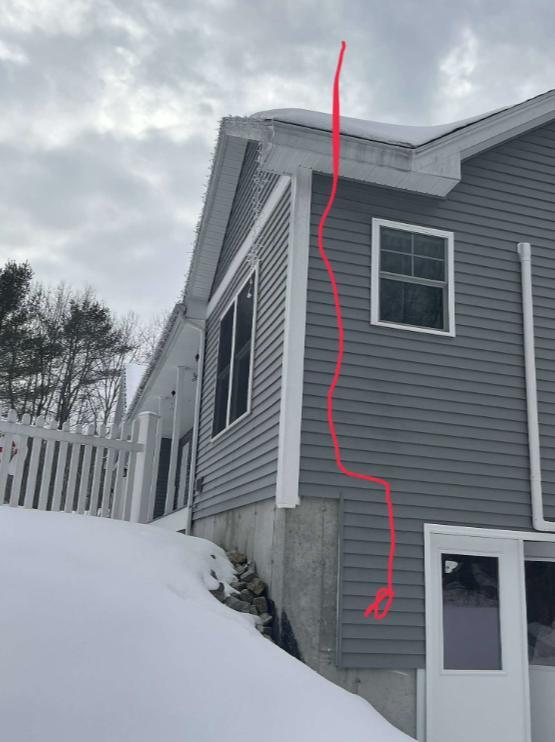
Before:
Marjorie K.’s home in Gray, Maine tested at 42.6 pCi/L, well above recommended levels. The home included radiant floor heating, which required extra care when determining the safest location for the sub-slab penetration. Because radiant tubing can run through the slab, we evaluated the area carefully to avoid damaging the heating system.
Our initial plan was to install the suction point in the back corner near the rear doors, but we prepared an alternate route if the radiant layout prevented drilling in that corner. In that case, the pipe could have been run from near where the radiant lines entered the floor and routed across the ceiling to exit through the same wall. An IR heat inspection helped confirm the safest drilling location.
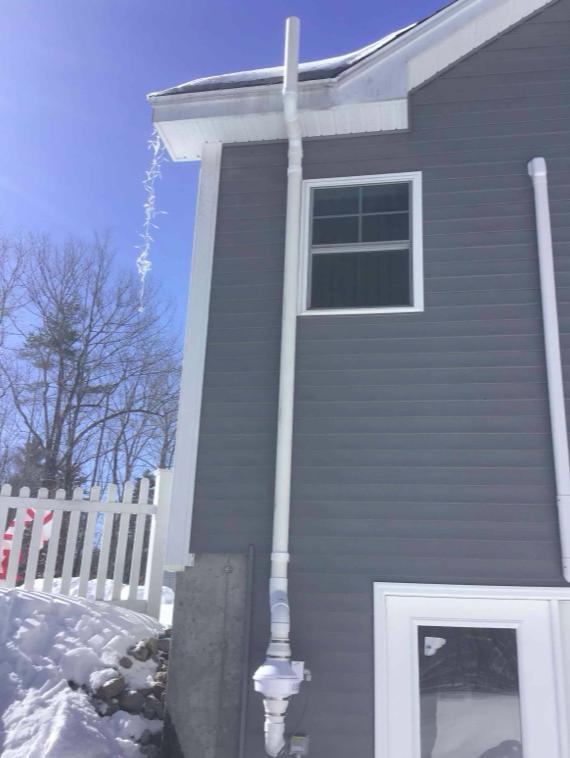
After:
The mitigation system was installed successfully while working around the radiant heating system. Power was supplied from an outlet located near the homeowner’s computer area, keeping the installation clean and efficient. The system exited near the rear corner of the home, maintaining a neat exterior appearance.
The installation was completed in approximately four hours, and the final setup looked professional and performed exactly as intended. Another Gray, Maine home protected with a carefully planned installation that respected the home’s radiant heating system while delivering effective radon reduction.
From 150 pCi/L to a Safer Home: Radon Mitigation in Gray, ME
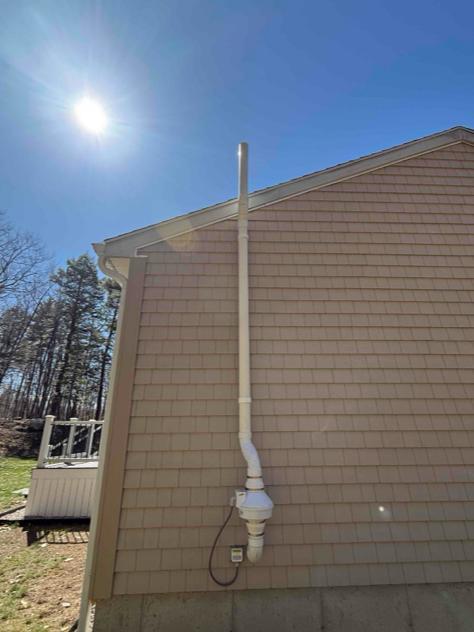
Cheryl R. in Gray, Maine had a radon test result of 150 pCi/L, an extremely elevated level that required immediate attention. With readings this high, a properly designed mitigation system was essential to help protect the home's indoor air quality and create a safer living environment.
The installation was planned through the basement access located near the garage, utilizing a route that provided an efficient path for the mitigation system. The property already had a sump area and additional pipe penetrations that required sealing as part of the overall radon reduction strategy. A 3" Valterra® gate valve was also incorporated into the project to accommodate the system design.
One unique aspect of the installation was the electrical setup. While a permanent outlet had not yet been installed near the system location, Cheryl planned to add dedicated power after the mitigation work was completed. In the meantime, a nearby outlet at the workbench provided temporary power for system operation and testing.
With the mitigation system installed and operating, the home now has a professionally designed solution addressing one of the highest radon levels we encounter. Projects like this demonstrate how even extremely elevated radon readings can be addressed with the right design, equipment, and installation practices.
From 150 pCi/L to a safer future—another Maine home protected.
Scarborough Radon Mitigation


The client was told they could not have a radon mitigation system installed due to high water levels. The problem was solved by adding a 1/2 sump and sub-slab radon system—another happy client.
Radon Mitigation


Client was looking for a sleek solution for high radon levels in the basement


