
Before & After Photos
Click on a photo to enlarge.
Two-Point Radon Mitigation System Planned for East Canaan Home
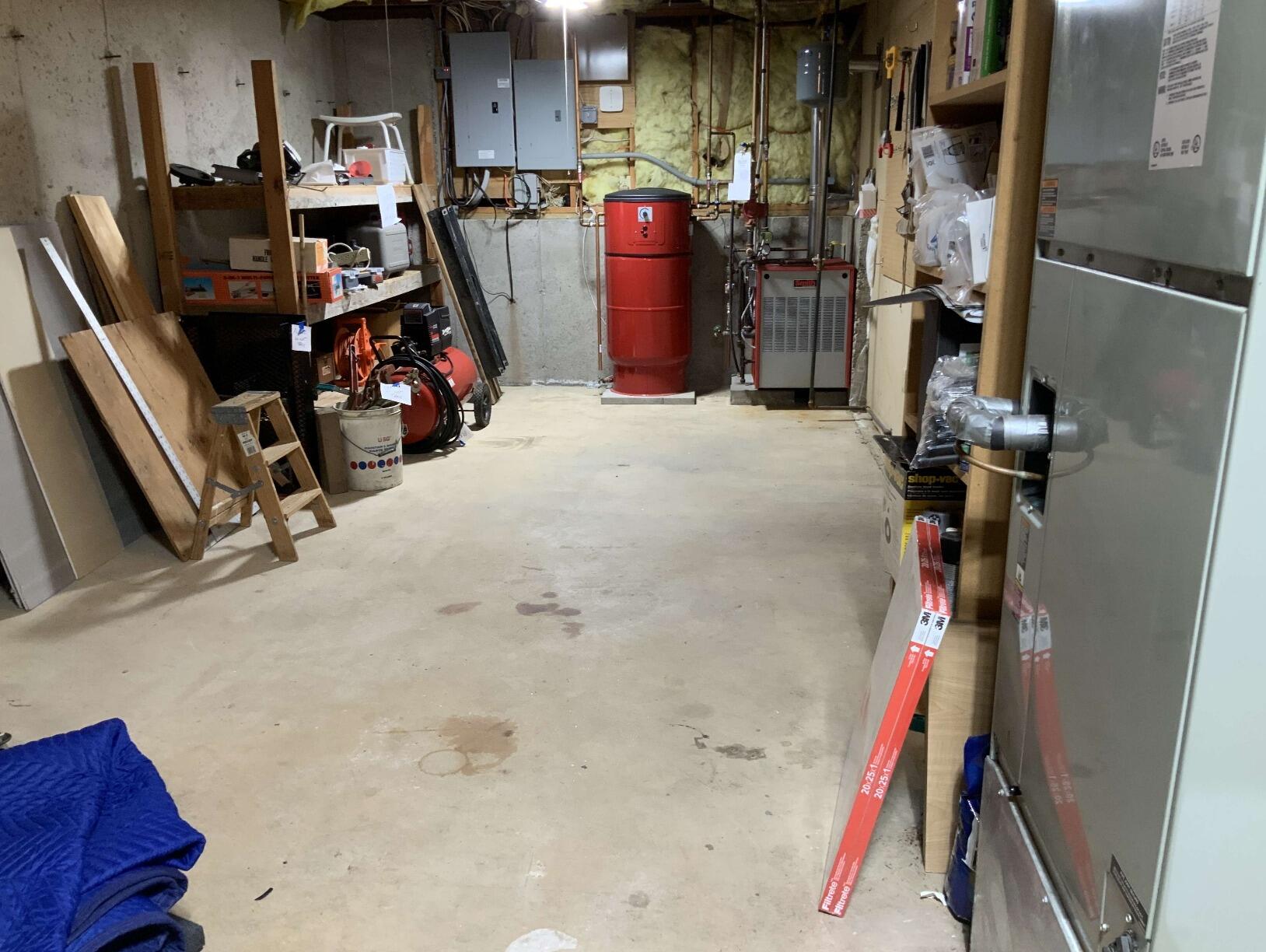
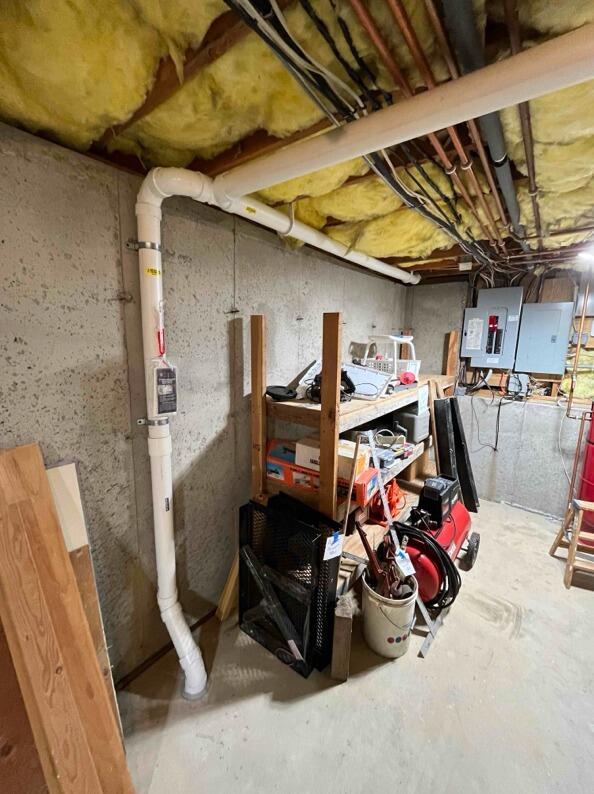
Before
The home currently has an elevated radon level of 10.8 pCi/L and no active radon mitigation system. The unfinished basement provides access for installing the two extraction points.
After (Planned Work)
A two-point radon mitigation system will be installed in the unfinished portion of the basement. One pipe will exit through the left side of the home, with the second extraction point located near the finished-space doorway by the shelves. A tall ladder will be needed to complete the exterior piping.
Premium Radon Mitigation System with Additional Extraction Point Installed
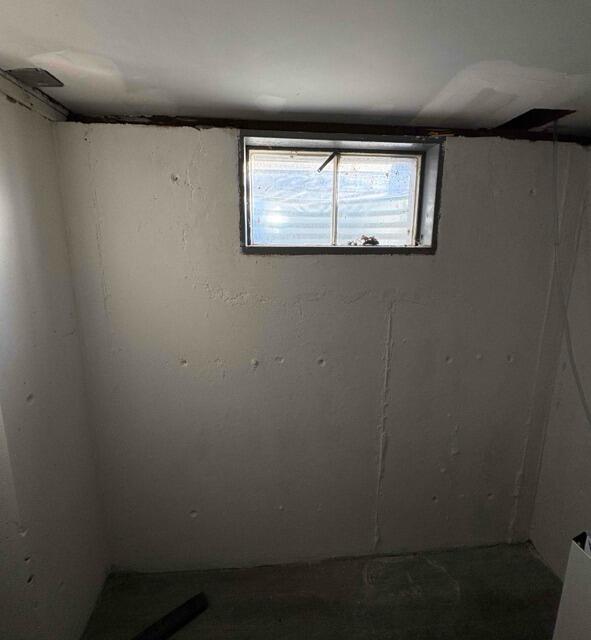
Before
The home had elevated radon levels with no mitigation system in place and limited airflow beneath the slab.
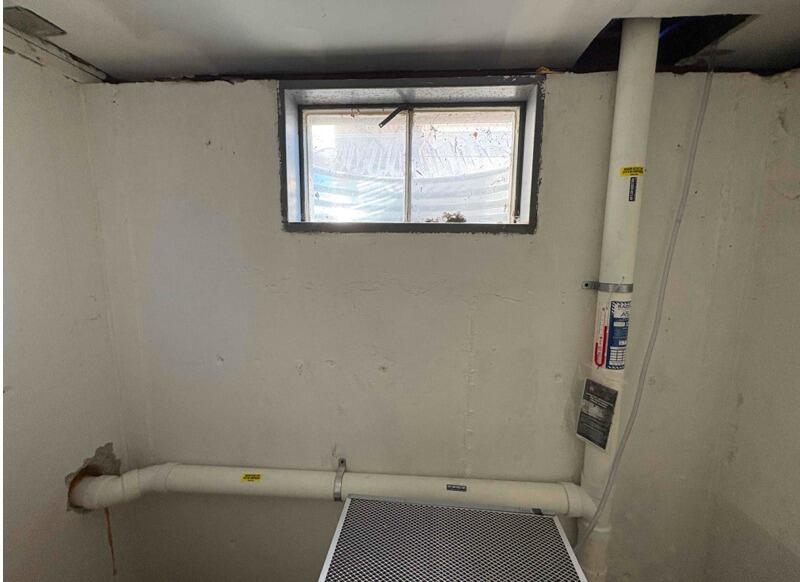
After
A premium radon mitigation system with two extraction points was installed, with piping routed to an exterior fan and vented above the roofline for effective radon reduction.
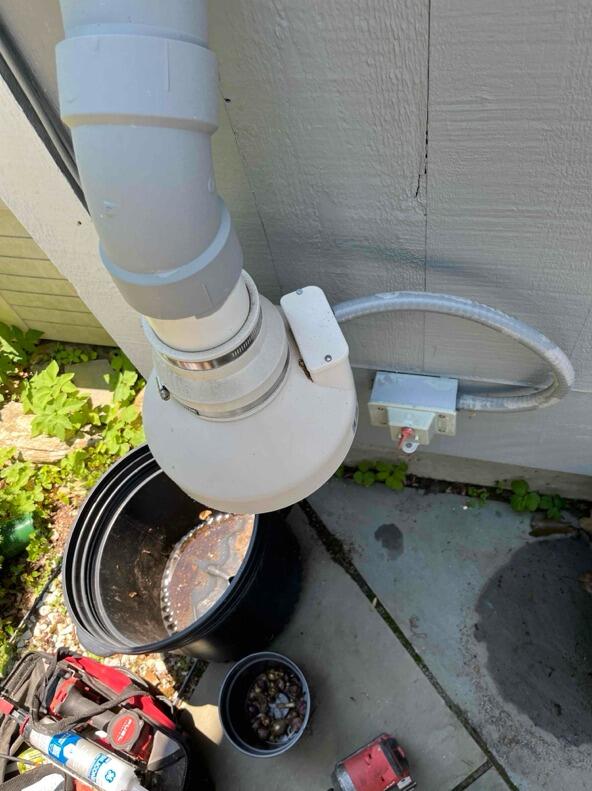
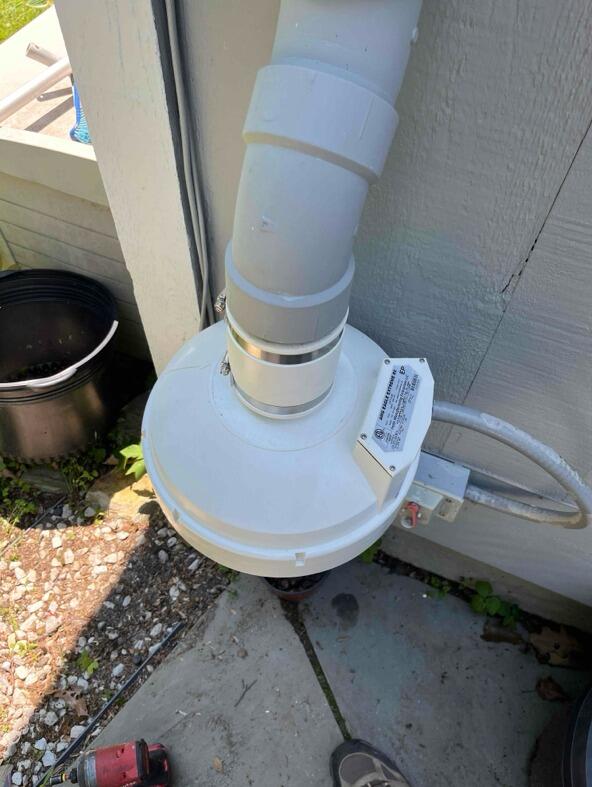
Radon Fan Replacement Completed in Southport Home
Before
The existing radon system had an older fan that had never been serviced, while radon levels were averaging between 5 and 10 pCi/L.
After
The older radon fan was replaced with a new fan, restoring reliable operation of the existing mitigation system.
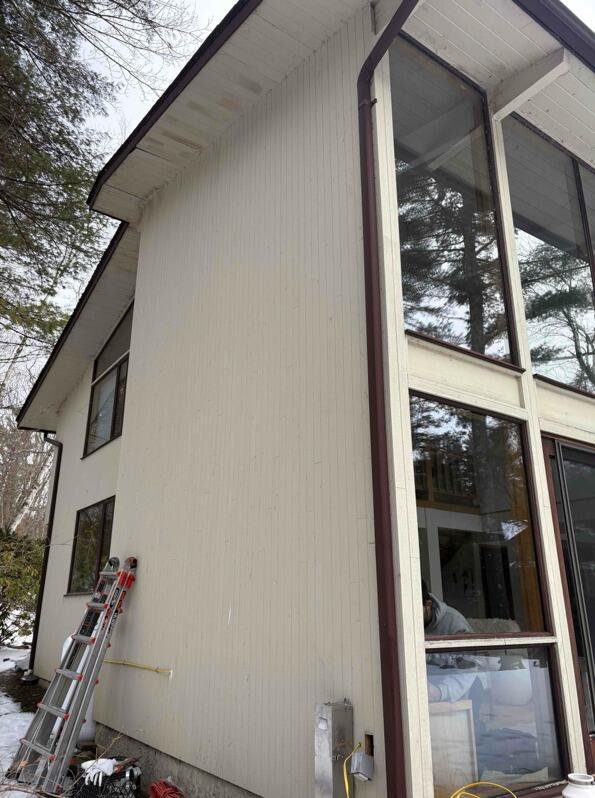
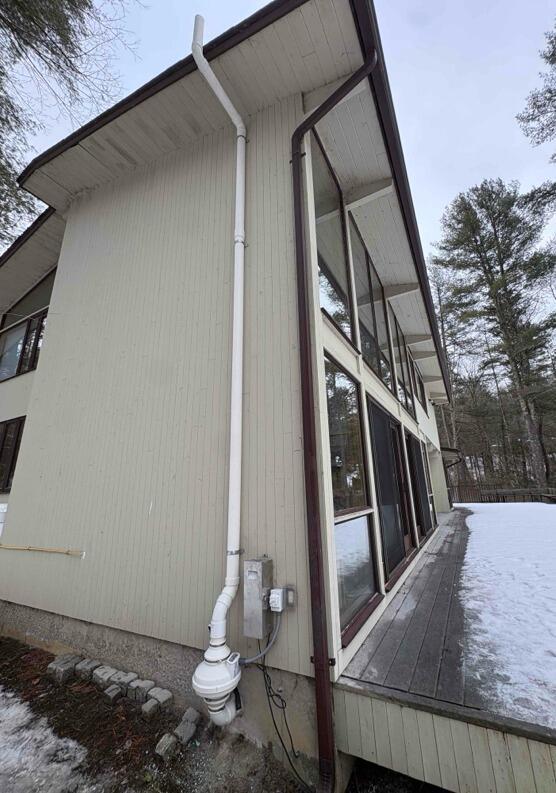
Radon Mitigation System Installed in Goshen Slab Home
Before
The home had a radon level of 2.2 pCi/L with no mitigation system in place. The structure is slab-on-grade, with an inaccessible crawl space below.
After
A single-pipe radon mitigation system was installed, with the pipe routed through the right side of the home to provide proper venting.
Multi-Foundation Radon Mitigation System Planned for Botsford Home
Before
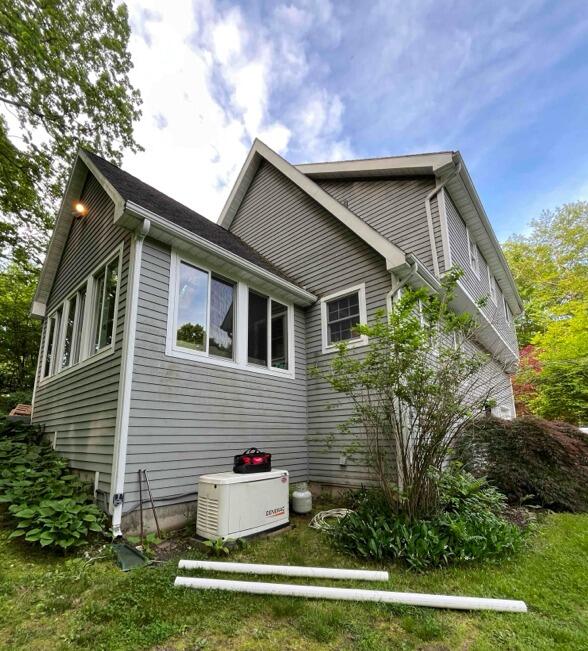
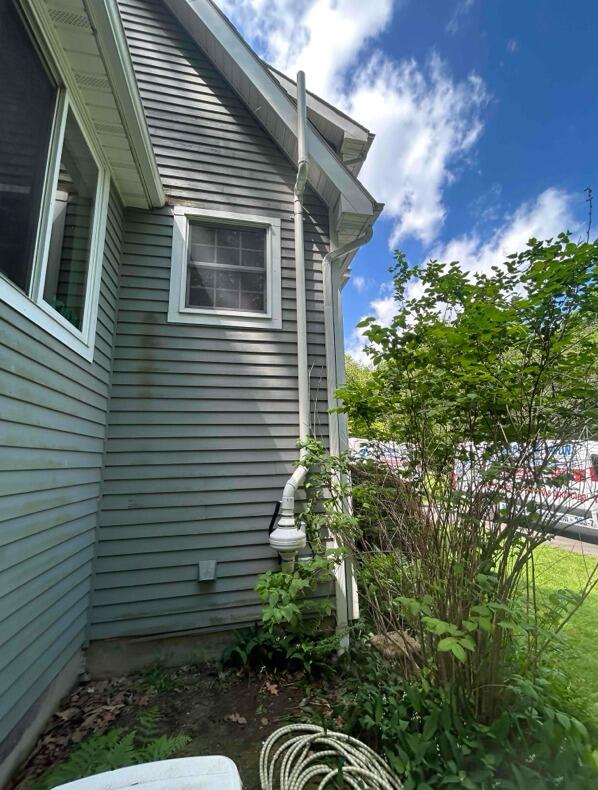
The home tested at 7.0 pCi/L in the basement and 4.5 pCi/L on the upper floors. Multiple foundation sections and an unsealed chimney opening created additional considerations for effective radon mitigation.
After (Planned Work)
A multi-point radon mitigation system will be installed, the chimney opening will be sealed with concrete, and the system will be routed to the left rear side of the home to provide long-term radon reduction.


