
Before & After Photos
Click on a photo to enlarge.
Radon Mitigation System Proposed for Shelton Home


Before
The home has a radon level of 11 pCi/L with no mitigation system in place and limited airflow beneath the slab.
After (Proposed Work)
A multi-point radon mitigation system is recommended, including two primary extraction points and an additional suction point to improve coverage.
Two-Pipe Radon Mitigation System Planned for Shelton Home


Before
The home tested at 21.1 pCi/L with no active radon mitigation system in place prior to the new homeowners moving in.
After (Planned Work)
A two-pipe radon mitigation system is planned to improve airflow beneath the foundation and reduce elevated radon levels throughout the home.
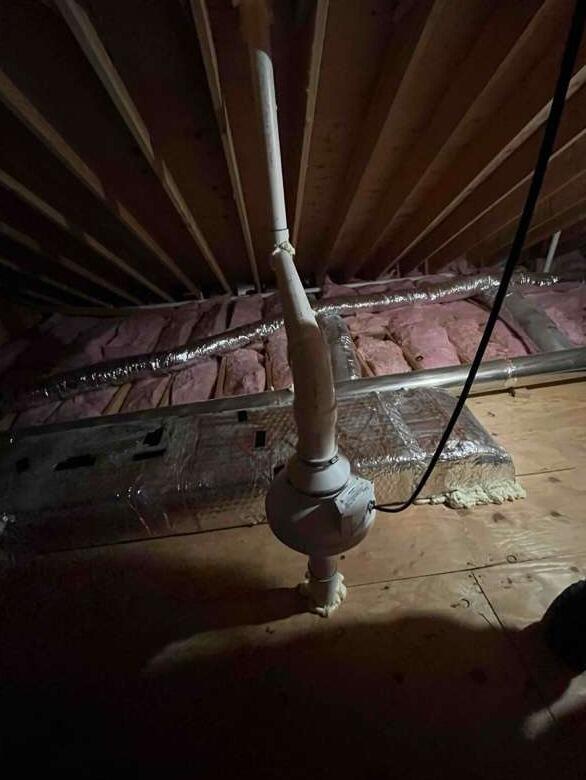
Radon Fan Installation on Existing System in Winsted
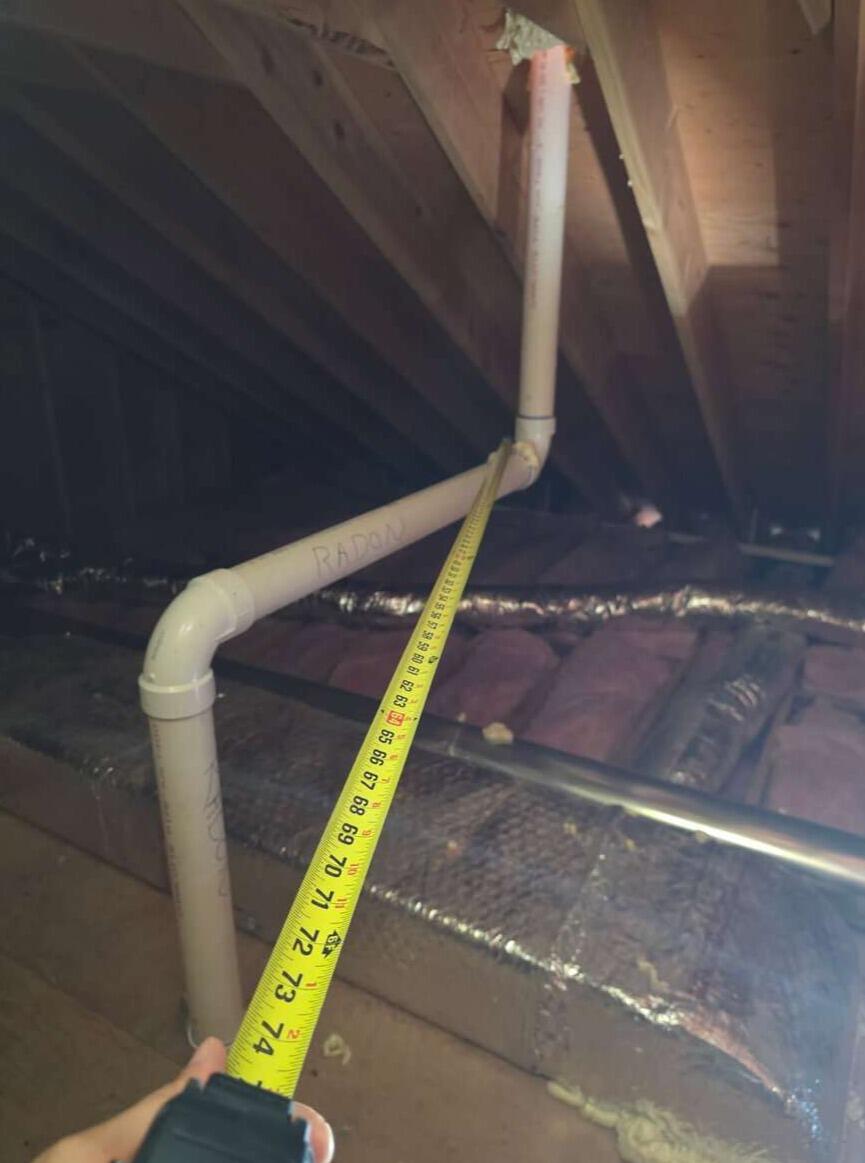
Before
The home had existing radon mitigation piping but needed a fan installation. A linear crack in the basement floor was also identified for further evaluation.
After
A new Hawk radon fan was installed on the existing radon piping. The basement floor crack remains a separate item for review and sealing-price discussion, and the homeowner will follow up after the electrician’s work is complete.
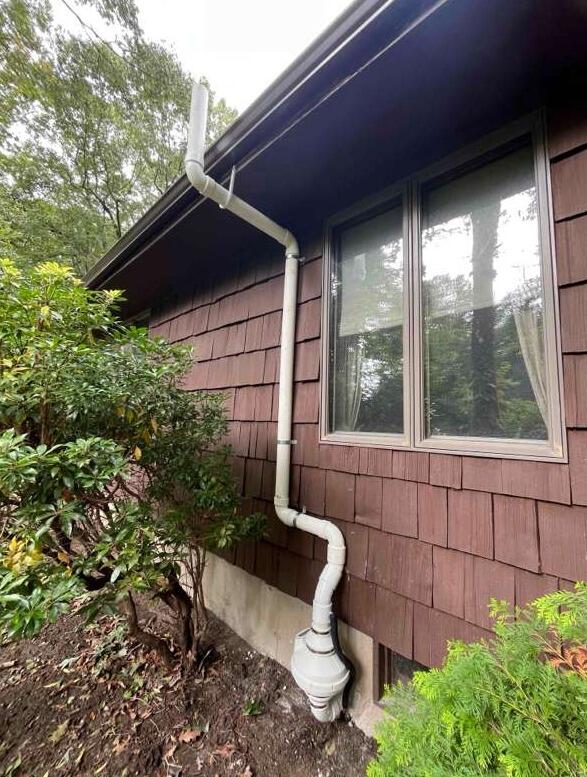
One-Point Radon Mitigation System Installed in Winsted
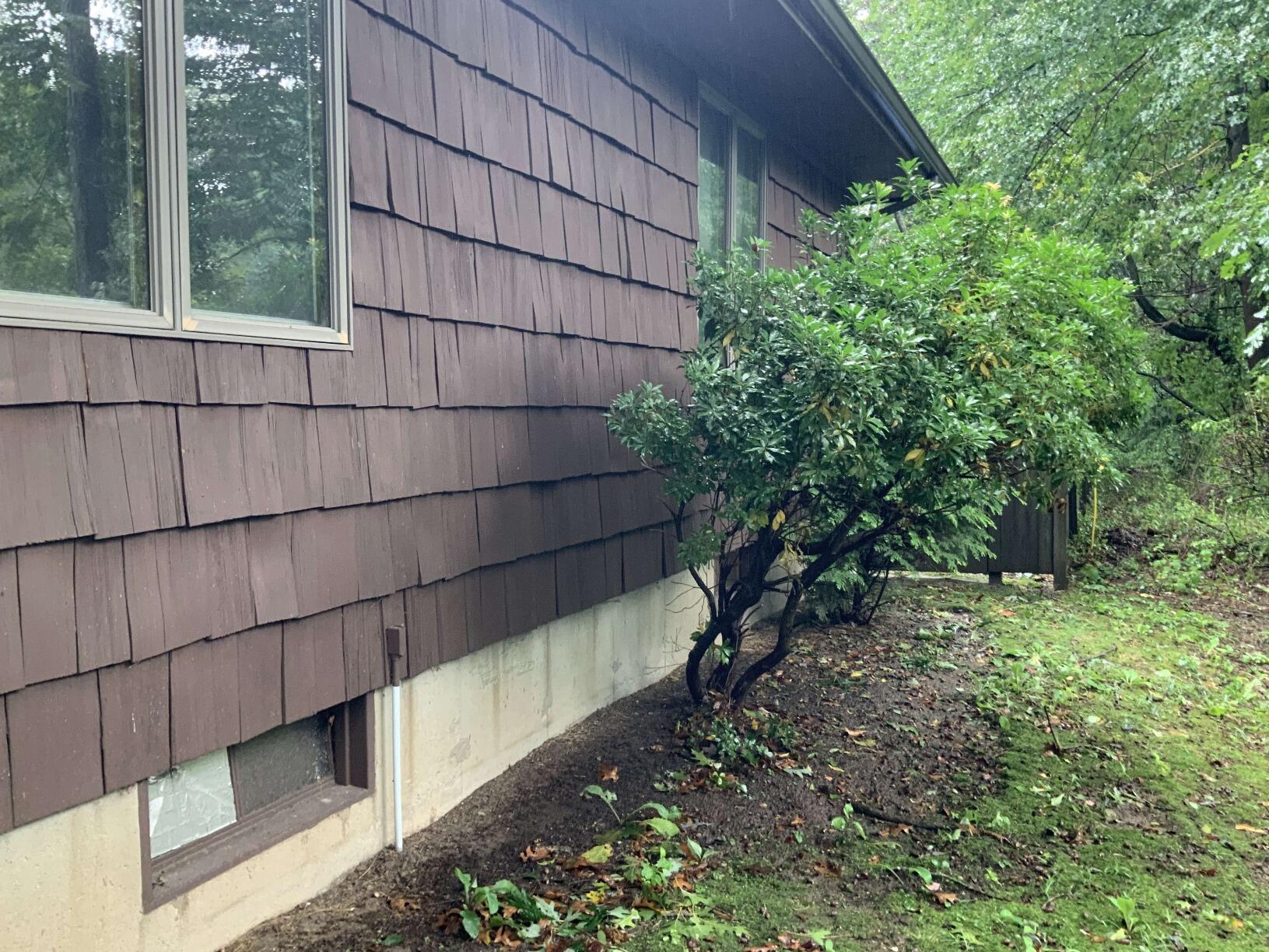
Before
The home tested at 5.4 pCi/L, above the EPA’s recommended action level of 4.0 pCi/L. An open trench approximately two feet wide and 20 feet long was present in the basement, and the homeowner wanted to address radon before moving in.
After
A one-point radon mitigation system was installed with a Hawk fan and piping routed through the rear right side of the home. The system was designed to draw radon from beneath the foundation and vent it safely outdoors above the roofline. The open trench was identified for follow-up cement work by the homeowner’s father-in-law.
Radon Mitigation Plan for Large Home in Watertown (Foundation Wall / Secondary Area)


Before
The secondary basement area along the foundation wall had no radon system in place, with exposed concrete and no extraction point.
After
A radon mitigation pipe was installed along the foundation wall, routed to provide additional coverage and improve overall system performance.


